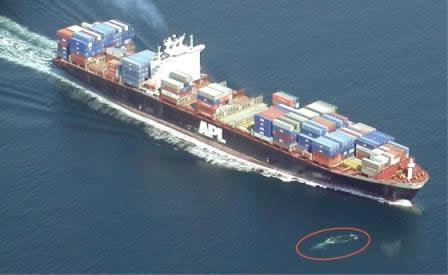
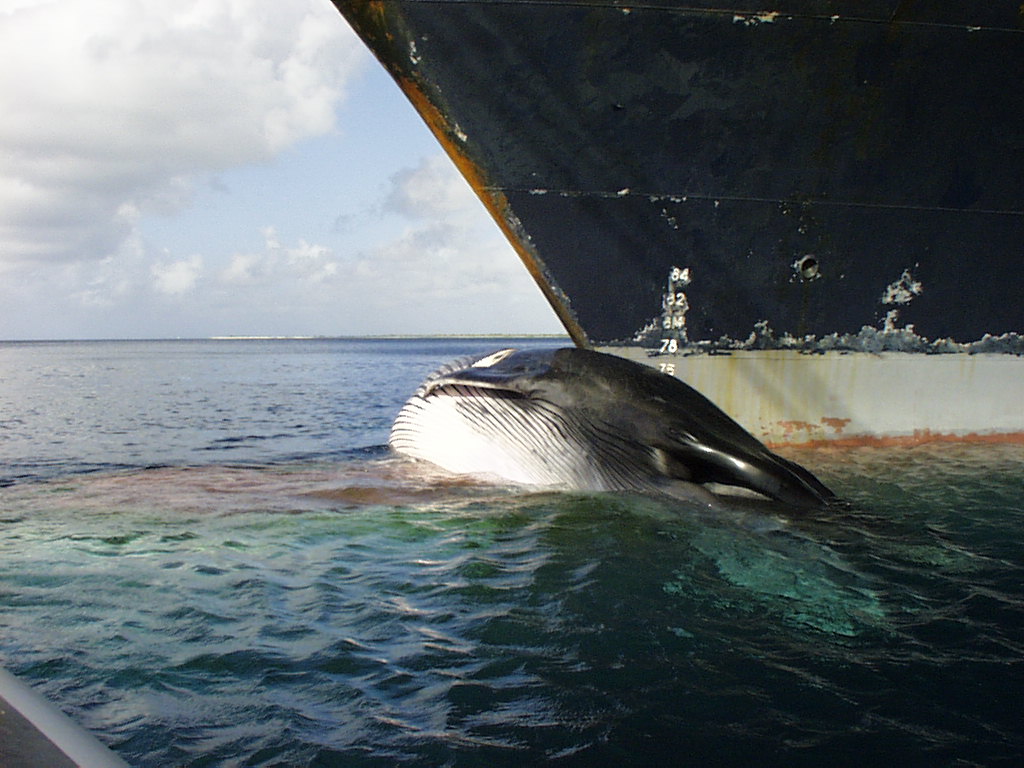
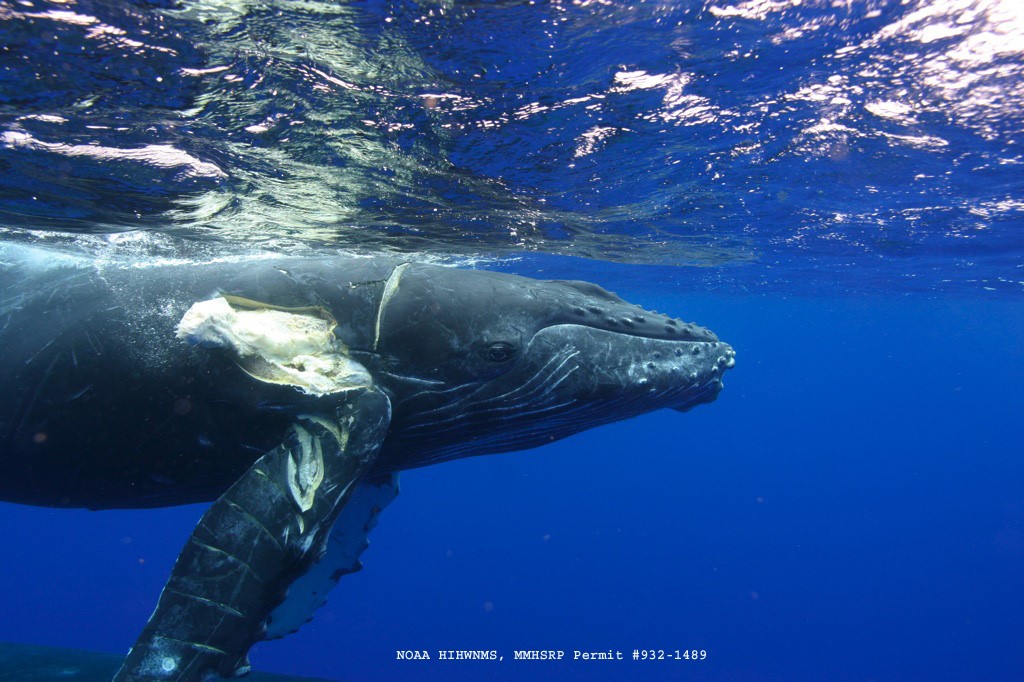
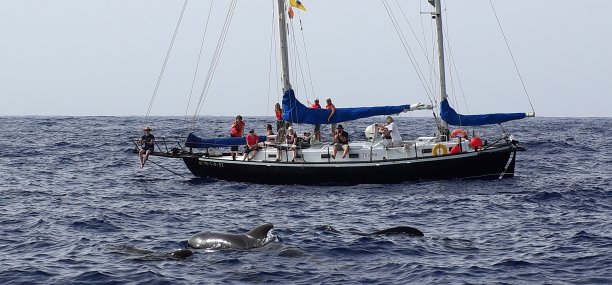
Most reports of collisions between whales and vessels involve large whales, but all species can be affected. Collisions with large vessels often go unnoticed and unreported. Animals can be injured or killed and vessels can sustain damage. Serious and even fatal injuries to passengers have occurred involving hydrofoil ferries, whale watching vessels and recreational craft.
The IWC and ship strikes
Both the Conservation and Scientific Committees of the IWC are working to understand and reduce the threat posed by ship strikes. A Strategic Plan to Mitigate the Impacts of Ship Strikes has been developed to assess and share solutions to achieve a permanent reduction in ship strikes. The IWC is also collaborating with other relevant organisations at both regional and inter-governmental levels to share information and expertise (see below).
Click to read the IWC Strategic Plan to Mitigate the Impacts of Ship Strikes on Cetacean Populations, 2022-32.
Click to read the IWC Ship Strikes Work Plan 2022-24.
Quantifying the problem
Evidence of ship strikes comes from a range of sources including direct reports from the vessel involved, and examination of dead whales found floating at sea or washed up on the beach. In some cases, whales become lodged on the bulbous bows of large vessels and the crew may only become aware of this when the ship enters port. For every incident that is observed and reported there will be many others that are completely unseen. This makes assessing the conservation implications of ship strikes very difficult.
For some populations, such as the North Atlantic right whale whose main habitat is the busy waters off the east coast of the USA and Canada, the mortality rate is particularly high compared to the overall population size. It is thought that mortality due to ship strikes may make the difference between extinction and survival for this species, and a range of mitigation measures have been developed. There are also concerns about the high collision rates for the population of fin whales in the Mediterranean.
Reported ship strike numbers will never give accurate estimates of the numbers of whales involved and so there is a need for estimates based on an understanding of risk, and relating this to densities of ships and whales.
In 2019, the IWC held a joint workshop with the International Union for the Conservation of Nature (IUCN) and the Agreement for the Conservation of Cetaceans of the Black Sea, Mediterranean Sea and Contiguous Atlantic Area (ACCOBAMS). The workshop looked at how the IUCN's programme to systematically identify Important Marine Mammal Areas (IMMAs) might be overlaid with shipping information and used to help pinpoint ship strike ‘hotspots.’ You can read the report of this workshop here.
The IWC Global Ship Strikes Database
Read a 2022 analysis of Global Numbers of Ship Strikes, compiled using the IWC Ship Strikes database.
In 2007, the IWC launched a long-term initiative to collect and analyse information about reported ship strikes, both historic and current, and on a global scale. The aim of this work is to identify 'hot spots' where large numbers of whales coincide with busy shipping lanes. This work is ongoing and the data is incomplete but, understanding the caveats, the IWC aims to share this information with the widest possible range of stakeholders to inform and further develop mitigation actions that are targeted and effective.
|
If you have information relating to a collision between any type of vessel and a whale, dolphin or porpoise please click here to enter your information. |
Mitigation Measures
There is no universal solution to the problem of ship strikes. Technological, operational and educational solutions are all currently being explored and here you can read a summary of the different types of measure that have been implemented around the world. For now, the most effective way to reduce collision risk is to keep whales and ships apart, and where this is not possible, for vessels to slow down and keep a look out. Mitigation measures need to be approached in a collaborative way, involving governments, the various industries and leisure sectors that use marine transport and the bodies that represent them.
One of the most important collaborations is with the International Maritime Organization (IMO) and the IWC has been working closely with their Marine Environmental Protection Committee (MEPC) including submitting a report on recent mitigation measures and outcomes. This provided the IMO with information on 'hotposts' where whale habitat coincides with busy shipping lanes, and feedback on the collision reductions plans that have been implemented in several of these areas.
In 2023, the World Shipping Council (WSC) launched the 'Whale Chart,’ a navigation aid in a form accessible to mariners listing measures that have been implemented globally by maritime authorities to reduce ship strike risks. The IWC provided input for this and will continue to work with WSC to ensure mariners have access to the information they need to comply with measures to reduce ship strikes. The WSC tool contains global mapping of all mandatory and voluntary governmental measures to reduce harm to whales from ships. The Chart is available for free to all interested parties. It will be regularly updated and offers critical navigational coordinates and concise graphics to identify routing measures and areas subject to ‘static’ speed restrictions designed to protect whales and other cetaceans.
Access the WSC Whale Chart
Some years ago, the IWC produced an information leaflet with further advice to reduce the risk of collision. You can read this advice here. The leaflet is also available in Arabic, Chinese, French, Russian and Spanish).
|
Further reading:
|