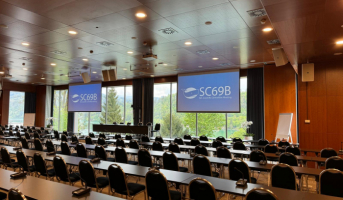
Starting today: IWC Scientific Committee meeting
22 Apr 2024
The IWC Scientific Committee begins its annual meeting today in Bled, Slovenia, bringing together international experts in a wide range of topics related to cetaceans and their environment.

Call for papers: JCRM Special Issue on whale tagging
5 Mar 2024
The IWC’s Journal of Cetacean Research & Management (JCRM) plans to launch a new Special Issue on cetacean tagging in 2024, and is calling for papers on key topics.
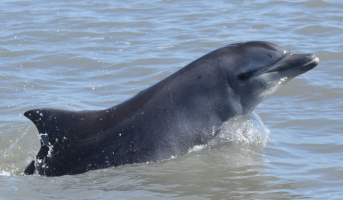
Lahille’s Bottlenose Dolphin: Task Team Workshop
29 Feb 2024
Members of the IWC Task Team for Lahille’s bottlenose dolphins are meeting in Brazil in March.
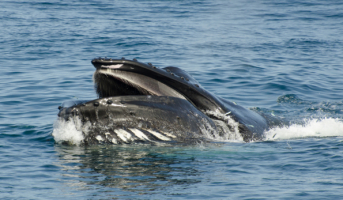
Comprehensive Assessment: North Pacific Humpback Whales
27 Feb 2024
In March, a small group of Scientific Committee specialists will gather in Seattle, USA, to complete the next stage in a comprehensive assessment of North Pacific humpback whales.
Comprehensive assessments provide the Commission with information on the current status of a particular whale population within a particular region, usually an ocean basin. The assessment tells the Commission whether that population is recovered, recovering, or cause for concern. It also identifies any factors that may affect the current status.
The process has several stages, beginning with a review of existing information and identification of key data gaps.
Understanding the structure of the population is a key component of this stage. Just as one species may exist in a number of different populations around the world, the population in one ocean basin may be divided into different sub-populations, also known as ‘stocks.’ Even within a relatively small area, some stocks may be healthy whilst others are not, so it is important to understand, as far as possible, how the stocks are structured. It is hard to establish stock structure with complete certainty and so scientists often recommend several alternative hypotheses, each of which is incorporated into the assessment.
Other information required to conduct the assessment includes:
- estimates of the current and past size of the population
- estimates of current and past removals from the population: deaths caused by impacts such as hunting, bycatch or ship strikes
- biological information such as growth rates, age of sexual maturity and male/female ratios
- environmental information
This information is obtained from a wide range of data sources such as genetic research, satellite tagging programmes, sightings surveys and photo-ID catalogues. Some of this information may exist already but much must be commissioned as part of the Comprehensive Assessment.
All available data are collated and used to develop a series of plausible scenarios relating to recommended hypotheses on stock structure; these are tested using computer modelling. Population models are developed based on each stock structure hypothesis. The analytical approach also includes tests to incorporate levels of uncertainty, inevitable in work that is reliant on many different types of inputs.
The Comprehensive Assessment of North Pacific Humpback whales began in 2016. Work since then includes analyses of genetic data and abundance, and use of an automated photo-ID algorithm to facilitate a large-scale photo-ID matching exercise. A number of refinements have been made as new data became available. New satellite tag research is also now being incorporated, which analyses data from tags deployed across both breeding and feeding grounds of the North Pacific humpbacks over a thirty year period.
The group has established and recommended two hypotheses for stock structure in breeding areas and two separate hypotheses for stock structure in feeding areas. The workshop in March will continue the computer modelling work and report to the next meeting of the Scientific Commission which begins in April.
Planning the next phase: Conservation Management Plan for southern right whales in western South Atlantic
26 Feb 2024
The next assessment of the Conservation Management Plan (CMP) for southern right whales in the western South Atlantic will be held in March, in Santos, Brazil.
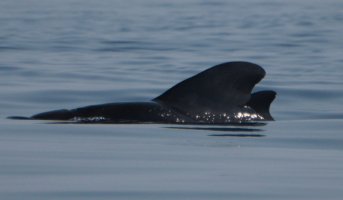
New Series of Scientific Committee Workshops: Small Cetaceans in the South Pacific
31 Jan 2024
In Auckland, New Zealand this February, the IWC will hold the first in a new series of workshops, reviewing dolphin and porpoise species in the South Pacific Island region.

Technical meeting: western North Pacific minke whale
15 Jan 2024
The Scientific Committee is taking the next steps to complete an In-depth Assessment of minke whales in the western North Pacific.
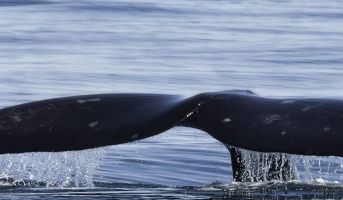
Views and collaborators sought for Indian Ocean Monitoring Initiative
11 Jan 2024
The IWC is circulating a questionnaire seeking expert views and collaborators on a proposed survey in the Indian Ocean.
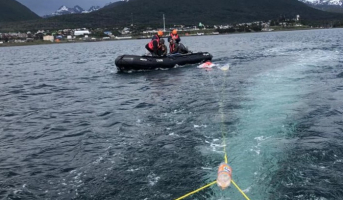
Crossing borders to address large whale entanglement: bi-national workshop in Puerto Williams, Chile
11 Dec 2023
The first large whale entanglement response workshop in the southernmost city of Chile has successfully concluded.
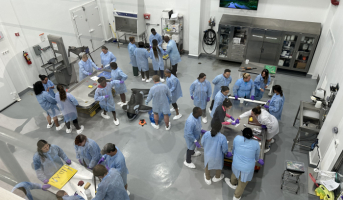
Successful delivery of strandings response training across the Caribbean region
27 Nov 2023
The IWC Strandings Initiative has completed an extensive Caribbean training project in partnership with CARI’MAM, the Caribbean Marine Mammals Preservation Network.

World Shipping Council: Whale Protection Conference launches ‘Whale Chart’ navigation aid
13 Nov 2023
World Shipping Council (WSC) launch navigational aid designed to reduce ship strikes.

IWC and CMS collaborate for second workshop on Cetacean Ecosystem Functioning
8 Nov 2023
The second IWC-CMS joint workshop on Cetacean Ecosystem Functioning will be held in Bonn this month.
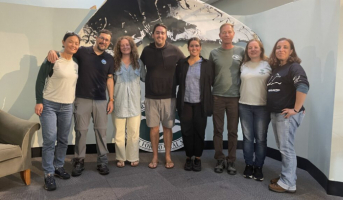
Latest entanglement response apprenticeships successfully completed
1 Nov 2023
Four Brazilian trainees have successfully completed advanced apprenticeships in entanglement response.
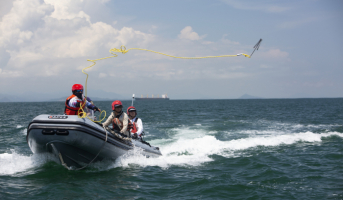
Large Whale Disentanglement Training in Puntarenas, Costa Rica
9 Oct 2023
The first large whale disentanglement workshop in Costa Rica has concluded successfully.

Workshop: In-depth Assessment for western North Pacific Minke
13 Aug 2023
Members of the Scientific Committee are meeting in Greece for a technical workshop as part of an In-depth Assessment for minke whales in the western North Pacific.
